

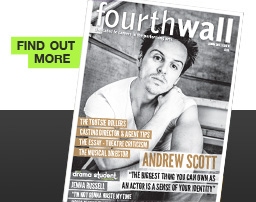




-
News: Pubs and theatre. An age-old pairing.
This exciting project will no doubt resonate with anyone that has ever stepped into a pub, so this February, grab your pint of Drunken Nights and witness something completely original and unique.
-
News: The 28 Day Project launches wonderful opportunities
The 28 Day Project is an exciting initiative offering emerging talent a step into the film business.
-
Have you got the Star Wars X Factor?
Thousands turned away at open auditions after standing in the rain for hours.
-
News: TheatreCraft returns to help young people’s backstage careers
The 8th annual event returns to the Royal Opera House later this month.
-
BLOG: Theatre: the best casino shows around the world
Casinos around the world offer some of the best theatrical entertainment you can find.
-
BLOG: 5 Best Actors in Superhero Cinema
Is “superhero” acting any less challenging?
-
Blog: Films to study for inspiration
Watching great actors can often inform your own work.
-
Blog: Shakespeare experimenting with the limits of contemporary drama
Briony Rawle heads to Yorkshire and takes a closer look at Shakespeare’s The Winter’s Tale.
-
Review: Bat Boy, Southwark Playhouse ✭✭✭
A campy fun musical with bite screams Douglas Mayo.
-
Review: Visitors, Arcola Theatre ✭✭✭✭
Barney Norris first full-length play is an exquisitely written examination of love and loss, writes Alex Delaney.
-
Review: 1984, Almeida Theatre ✭✭✭✭✭
This fresh vision of 1984 feels like a rediscovery of Orwell’s dystopia, writes Sophia Longhi.
-
Review: Secret Theatre - Show 4, Lyric Hammersmith ✭✭✭✭
This review comes with a capitalised, emboldened and even italicised, SPOILER ALERT. That should do, writes Briony Rawle.
-
 Interview: Tim and Jessica - Made in China
Emily Hardy meets up with the founders of award-winning theatre company.
-
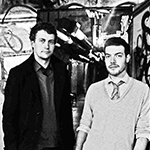 Interview: Tim and Mat of The Heritage Arts Company
VAULT 2014 promises to be bigger, better and even more fabulous than the first time around, writes Sophia Longhi.
-
 Cabaret: Outrageous Single Girls Valentine’s Day
Christmas is well and truly over. The trees have been slung to the kerb, the decorations are packed up in the loft and even the Bountys have been eaten from the Celebrations tin.
-
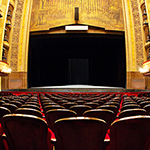 THE ESSAY: The Future of Theatre Criticism
In an information, saturated world, who do you trust? What is the future of traditional theatre criticism? Emily Hardy investigates.
-
Blog: The Holistic Actor
Your mind, emotions and body are instruments and the way you align and tune them determines how well you play life.
Add a comment
The energy we generate on stage is powerful enough to reach across the stage into the audience and alter them. Harnessing that energy as actors is something we all aspire to, and acting training teaches techniques which give us tools to access that store of energy. Technique, however, is just a part of acting. Technique tends to be, in the UK, a very cerebral approach, a mental state. Secondary to that mental state is the physical state, and finally, the metaphysical, the energy. It is the energy, the life-force of acting that we should be seeking to discover.
“Your mind, emotions and body are instruments and the way you align and tune them determines how well you play life.” Yogi Bhajan.
Holistic Acting is an approach to acting that attempts to harness that energy, to balance the mind, body and spirit of the actor and to harmonise them, creating a total actor, a holsitic actor.
Holistic Acting explores techniques that may be useful for actors to consider alongside their training. Using established practices and applying them to acting training may extend your ability and push you on to greater achievements. Above all, Holistic Acting is nurturing.
The technique reviewed here sits neatly alongside cerebral techniques as complementary. Image Streaming is outlined very effectively by the acting coach Brian Astbury in his book Trusting the Actor. Astbury discovered the technique in Wim Wenger’s book The Einstein Factor and adapted it for actors. It is a deceptively simple technique to practice with a partner or alone with a recording device and is particularly effective as a precursor to character work.
The technique works best if it is begun in the same way you might begin a meditation, or a relaxation process. Ensure you are sitting comfortably, that you are warm enough, and you will not be disturbed. If you are working alone then now is the time to start recording. If you are working with a partner, ensure they have paper and pen to take notes. Take several deep breaths; in through the nose, out through the mouth, calming yourself and clearing your mind.
It is important not to force the images, nor to influence or judge them, or analyse them while you are actually streaming. Just allow them to come.
Then, begin to speak about your character. Start with “S/He looks like…” or “S/He is wearing…” Start simply, describing hair colour, or clothes, until the images start to flow freely. This may take longer depending on how often you use the technique. Don’t be worried if you cannot “see” things - sometimes the images come as a feeling “I feel cramped and small” or “I’m irritated” - or, very typically at first, “I feel stupid”. The important thing is not to correct yourself, to let yourself speak, without censure or stopping, allowing the images and feelings to stream from you.
It is important not to force the images, nor to influence or judge them, or analyse them while you are actually streaming. Just allow them to come, no detail is too small or too pointless to be mentioned.
If you are working with a partner it is their job to record as much of the stream as possible. Sometimes proximity to another person may make the stream difficult to start. In which case they may prompt the stream by asking questions, such as “How do you feel?” or “What can you see?” or sometimes, during the stream, if it seems to have halted, then they may prompt with the words “and?” or “go on”, but their primary role is to record.
An image stream lasts as long as it lasts.
It could be five minutes, it could be longer. When it is complete, review everything. If you are working with a recording, you need to then take on the job of the partner, listen to the recording and take notes on it. If you have been lucky enough to work in a pair, you would review the notes together. Look through the highlights, point out recurrences, look at themes, colours, feelings.
Image streaming helps to bring a character to vivid life, as it is often highly imaginative, sensory and detailed. Do not, however, get caught into a trap of thinking, “Well, in my image stream I was wearing a bright red dress, and the costume designer has put me in blue - that’s wrong.”
Perhaps your character is dressed in blue, but in her own imagination she wears dazzling, glorious red - what a wonderful inner life this could give your character.
Similarly, don’t throw out anything that you have already discovered about your character in rehearsal or via your own preparation - these can be very useful starting off points. If you already know where the character lives, or what they wear, or how they speak, it can be very useful to place that awareness into the stream at the beginning and see where it takes you.
“If we fail to nourish our souls, they wither, and without soul, life ceases to have meaning…. The creative process shrivels in the absence of continual dialogue with the soul. And creativity is what makes life worth living.” Marion Woodman.
Trusting The Actor by Brian Astbury is available through Amazon. ●
Follow @HolisticActing on Twitter

